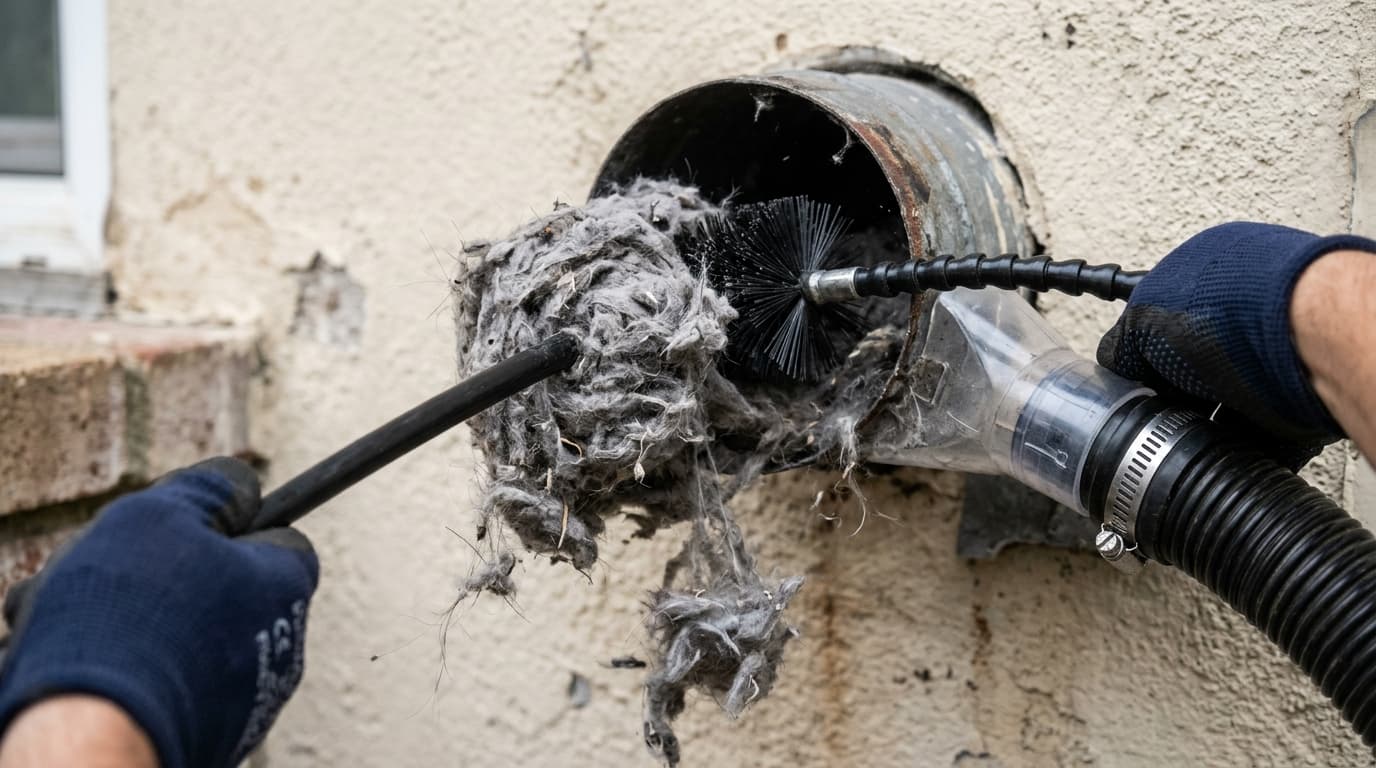
Clothes dryer fires cause thousands of residential structure fires and millions in property damage every year. Learn how lint ignition occurs and how to safeguard your home.
The Sobering Statistics of Dryer Vent Fires
According to the U.S. Fire Administration (USFA) and the National Fire Protection Association (NFPA), an estimated 2,900 home clothes dryer fires are reported each year in the United States, causing an average of 5 deaths, 100 injuries, and over $35 million in direct property damage.
The leading cause of these residential fires? A failure to clean the dryer and exhaust venting system (accounting for 34% of all dryer fires). Lint is an extremely flammable material composed of shredded cotton, synthetic polymers, and microscopic cellulose fibers that ignite with alarming speed.
How Lint Ignites Inside Residential Venting Systems
When an exhaust duct becomes clogged with lint, the blower wheel can no longer push the required volume of air across the heating element. As air stagnates, cabinet temperatures climb to dangerous levels. Tiny lint embers can ignite and get pulled into the exhaust ductwork, which acts like a horizontal chimney, spreading flames directly into wall studs, floor joists, and attic insulation.
Crucial Fire Safety Habits for Every Household
Beyond annual professional vent cleaning, every Rockwall homeowner should adopt these safety habits: Never run the dryer when sleeping or leaving the house; clean the lint filter before every load; never dry items that have contacted flammable liquids (gasoline, cooking oil); and verify that your exterior exhaust hood damper flapper swings open freely.
Related Services & Fire Safety Resources
Explore other related pages across our Rockwall dryer vent silo:
Frequently Asked Questions
How hot can a clothes dryer get if the vent is clogged?
Internal dryer temperatures can exceed 250°F to 300°F when exhaust airflow is restricted, well above the ignition point of fine cotton and synthetic lint.
Which part of the dryer actually catches fire first?
Fires usually start when lint that has built up inside the dryer cabinet or transition hose contacts the glowing electrical heating element or natural gas burner flame.
Will a smoke detector in the hallway wake me if a dryer catches fire?
Smoke detectors are essential, but laundry fires behind closed utility room doors can spread inside wall studs before detectors outside register smoke. Prevention is vital.